
Albany County Crime News Sources
The local reporting mix splits into clear roles. Times Union local news is the regional newspaper source, carrying selected crime and arrest coverage. For television reporting, WNYT's crime tag gathers Sheriff-related stories from around the region. Spotlight News rounds things out with local crime pieces and a periodic Colonie-area blotter. None of these outlets runs an official county booking roster, and none promises a fixed feed window.
Official pages come first when custody or a releasable record is the question. Albany County Corrections sends status checks to VINE instead of posting a public photo roster. Albany Police, Colonie Police, and Guilderland Police each have agency and records routes, but none offers a routine daily mugshot feed. News supplies context here. Treat it as one lens on arrests, never proof that every booking or release has surfaced.
Albany County Outlets and Records
Every outlet brings its own editorial scope and photo habits. One story may quote an agency directly. Another may describe a court hearing or run a supplied image. None of that confirms where a person was booked. A dated article can also stay online long after the underlying case has moved on.
| Outlet or source | Coverage role | Photo and record limit | Where to look |
|---|---|---|---|
| Times Union | Selected regional local news and archive discovery. | Not a systematic arrest or booking index. | Local news section |
| WNYT | Regional breaking crime, arrest, and agency reporting. | Article photos are not automatically booking photos. | Crime tag |
| Spotlight News | Crime reporting and periodic Colonie-area blotters. | Selective entries, not a facility database. | Crime coverage |
| RecentlyBooked | Third-party county index with claimed recent booking-style fields. | Unofficial, volatile, and must be verified. | Albany County page |
| Mugshots.com | Third-party historical county archive. | Appeared older, roughly 2012–2019, not same-day official data. | Albany archive |
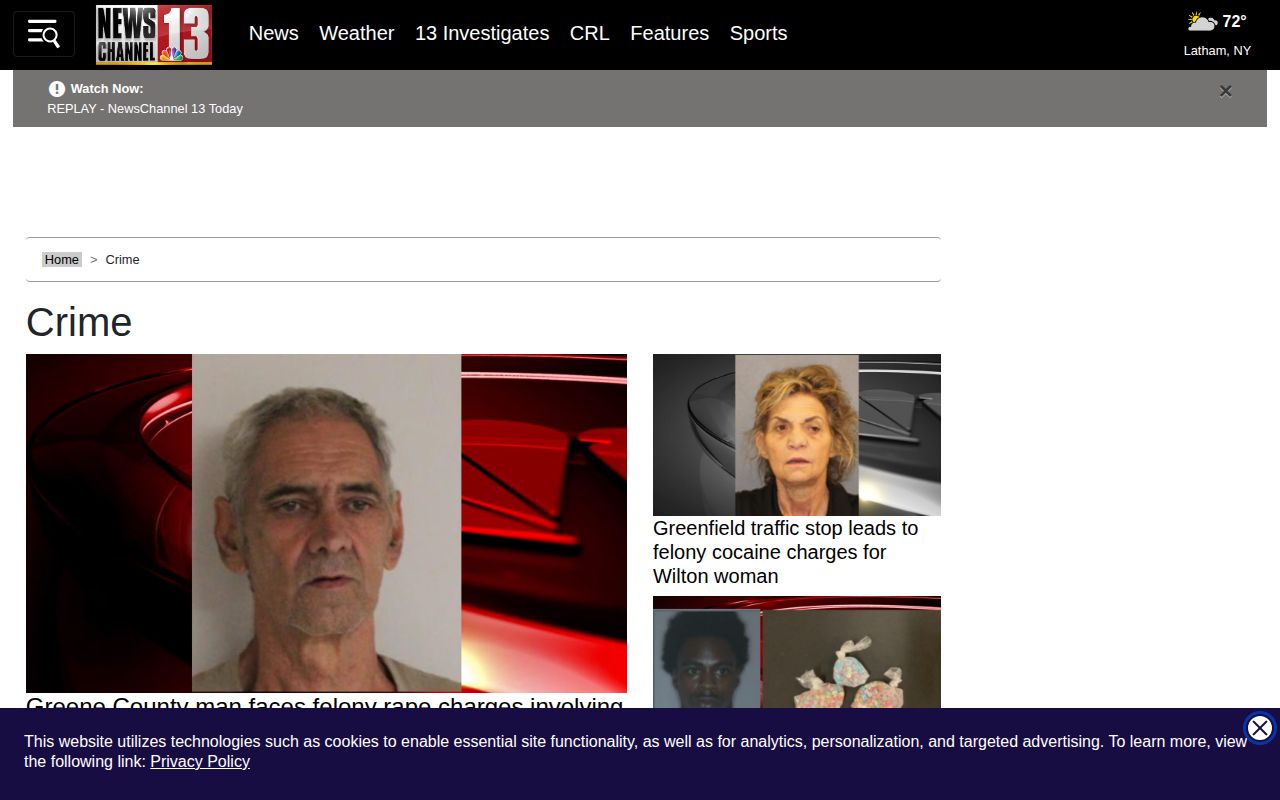
The WNYT crime-tag capture shown below is a sample of a local-news index. It offers reporting context, not a public mugshot search.
Pull the agency and date from the story first. Then take any material fact to the agency or the court that owns the record and confirm it there.
Albany County News Photo Limits
New York FOIL does not turn every police or correctional photograph into a public website asset. A picture in a news report might come from an agency release, a press request, a court file, or surveillance material. Don't call it a booking photo unless the article or the agency does. The current Albany County corrections page documents no public photo roster.
Third-party publishers rank below official sources. Their entries linger after a record changes. RecentlyBooked claims county arrest-style information and images when available, though it has no tie to ACCF. Mugshots.com's Albany material looked historical. No verified Albany County local page exists for Busted Newspaper, Mugshots.zone, or Arrests.org. Guessing county links would mislead visitors.
Labels deserve caution. Only the article or the originating agency can say whether a given image is truly a booking photo.
Albany County Story-to-Record Path
A name in a news story is a lead, nothing more. Begin with the agency the article names. That office may hold the report itself. ACCF would hold a custody record only if the person was actually detained at the county level. Someone issued an appearance ticket, released, or routed straight to a court event may never show up in a county booking at all. And once a person leaves custody, a current status system may stop listing them.
- Save the story date, named agency, court, and any case or incident reference.
- Use the official county custody route only when current detention or release is the question.
- Ask the named agency for a narrowly described releasable record through its records or FOIL process.
- Search WebCriminal for selected court information and future appearances.
- Request a Certificate of Disposition from the appropriate court for the official completed-case result.
WebCriminal has gaps. New York Courts says so plainly. Sealed matters, youthful-offender cases, matters not yet entered, and cases with no future appearance may all be missing from it. So an empty search result proves nothing about whether the reported event happened. It also returns no disposition.
Albany County Blotter Patterns
WNYT and Times Union shine on selected breaking developments. Spotlight News contributes something different. It runs a periodic Colonie-area blotter. An entry there typically lists charges, locations, and county-jail language from before arraignment. It stays selected coverage, though, not a daily log of everyone booked. Publication dates also drift from arrest dates, booking dates, and later court appearances. The Spotlight News crime capture is included for that local flavor.

This recurring format can help you guess the arresting agency. It cannot replace an ACCF custody check, an agency record request, or the court file itself.
Albany County City News Context
City and town reporting often points to a municipal records office. Albany Police records and FOIL information sits apart from county custody. Colonie stories can involve two desks. The town police department handles one, and ACCF handles the other, since the county facility sits within Colonie's borders. Guilderland Police runs its own records hours plus a Town Clerk FOIL route. So nail down the arresting agency before you request anything. Otherwise a broad county search may land with the wrong custodian. The full official-first custody and booking-record breakdown lives on the Albany County records lookup page. And when a story mentions a possible warrant, confirm it with the issuing court or agency rather than a media archive.
Albany County Crime News Is Not a Feed
Local news covers Albany County crime unevenly, and that is worth knowing up front. WNYT and the Times Union pick which incidents to write about. They sometimes follow up later as cases move through the courts. Spotlight's occasional Colonie pieces can surface an enforcement detail that statewide outlets skip. What none of them offer is a same-day tally, a full multi-day count, or any promised archive of county bookings. So a slow news day proves nothing. A busy one is not a census either.
Agency releases and social posts have the same gaps. They get edited, deleted, or reposted. They never settle into a stable public roster. When a publication does include a photo, keep track of where it came from and when. A booking image is not a surveillance still, an evidentiary picture, or a simple portrait. No verified official booking feed on county social media exists.
Where does that leave you? Treat a news story as a starting point, not a finish line. The court file settles how a case actually ends. If a case is later sealed or resolved favorably, an old news item or third-party page can linger online long after the record itself says otherwise. That mismatch is common. It is why the courthouse beats the clip file.
Albany County Crime News Court Context
A news story almost always lands before the court record does. The next official paper trail might be a scheduled appearance, a local criminal-court file, material from Albany County Court, or a Certificate of Disposition once the case wraps up. Charges are not fixed at arrest. They can shift between booking, arraignment, and the final outcome, so the wording in day-one coverage rarely tells the whole story.
This sequence also explains a common frustration: names and dates refuse to line up across sources. The arresting agency logs the event itself. The jail logs custody. The court logs the legal case. The paper logs whatever a reporter could confirm on deadline. Keep those boundaries straight instead of mashing four different records into one claim, and the picture gets a lot clearer.
Albany County News Archive Limits
Older reporting deserves the same skepticism as a fresh headline. A Times Union feature covers the Bertillon identification materials held by the Albany County Hall of Records. That collection spans 1892 through 1917. It is history, not a live arrest feed. It says nothing about modern bookings at the county correctional facility or any person in custody. For what the collection actually contains and how to see it, the Hall of Records and its official finding aids govern, not the news story that described them.
Third-party sites carry their own traps. Mugshots.com's Albany material is grouped by older arrest years. RecentlyBooked bills itself as a newer index, but it runs on an unofficial, volatile update marker. Agencies and courts can correct, seal, or change a record long after an article or index went live. Three dates may disagree: the article's, the agency statement's, and the booking's. Keep the source date and the agency attribution. Skip conclusions the source cannot support.
Match the tool to the question. VINE or the holding agency answers a current status check. The court handles a disposition. For historic research, the Hall of Records or the State Archives route that fits the era and custody system of the time is the right path.